

Yes, smart film and smart glass can absolutely be used in showers and bathrooms, but they need to be installed correctly to handle moisture and humidity safely. Smart glass works by switching from clear to frosted with electricity, giving you instant privacy without curtains or blinds. In showers, it's commonly used for shower doors, partitions, and bathroom windows.
For wet environments, smart glass is usually the better long term option because the technology is sealed inside laminated glass. Smart film can also work in showersjust as well, but only if the edges are properly protected from water exposure.
The main thing to understand is waterproofing. The glass itself is water resistant, but poor installation can expose electrical connections and film edges to moisture. Professional installation matters.
If you want the most durable solution for a shower, laminated PDLC smart glass is usually the safest and most reliable choice.
Bathrooms have changed a lot over the last decade. What used to be purely functional spaces are now designed more like personal retreats. Smart glass and smart film fits perfectly into that shift.
Instead of relying on curtains, textured glass, or bulky dividers, smart film and smart glass gives you privacy only when you want it. With the press of a button, the glass changes from transparent to opaque in seconds.
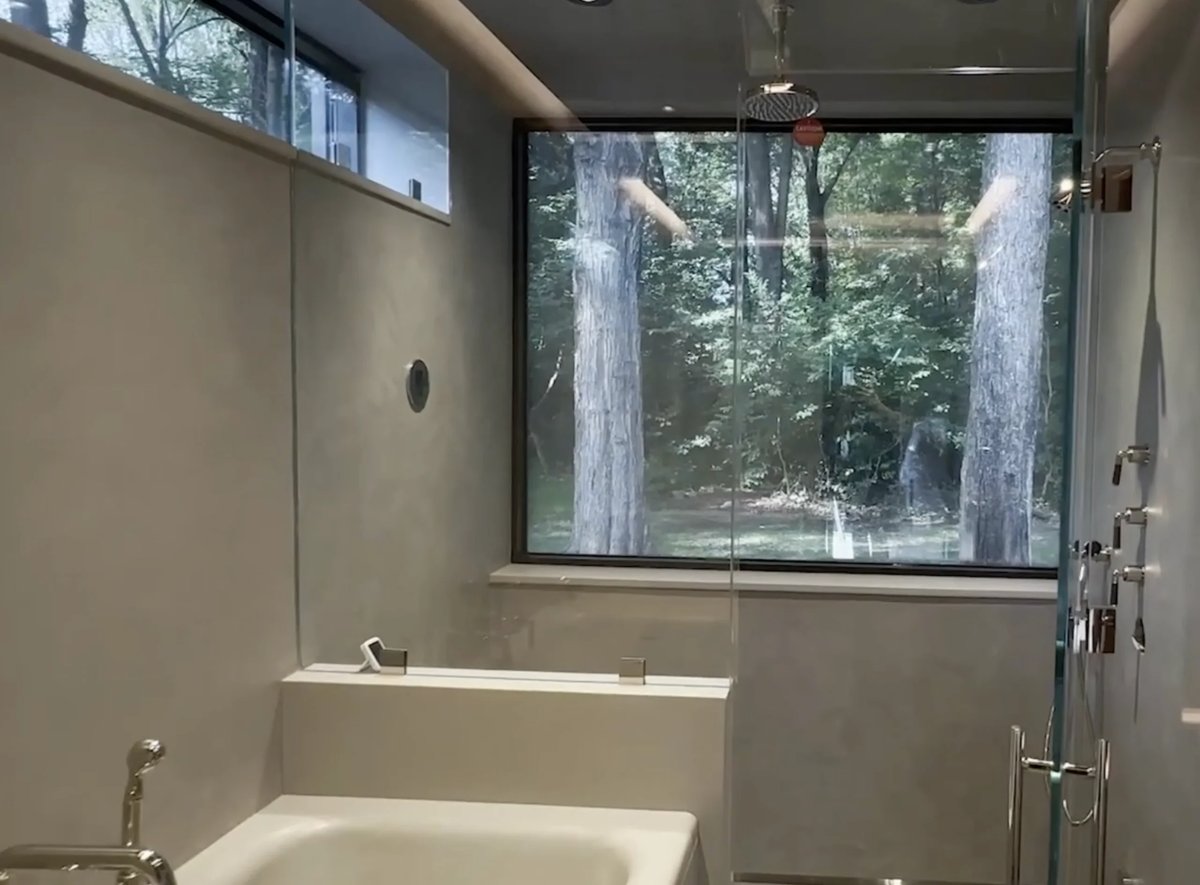
See how switchable smart glass transforms bathrooms and showers with instant privacy control, from transparent to frosted at the press of a button.
Smart glass is glass that changes its appearance when electricity is applied. The most common type used in showers is called PDLC smart glass. PDLC stands for Polymer Dispersed Liquid Crystal.
An electrical current aligns millions of microscopic liquid crystal molecules in perfect order. Light passes straight through, and the glass becomes transparent.
The liquid crystals return to their natural, random state. Light scatters, and the glass turns opaque — instantly creating privacy. In its frosted state, up to 91% of light is diffused.
This technology provides fast switching speeds, silent operation, and long-term durability. Our systems are compatible with wall switches, remote controls, smart home automation platforms, and building control systems.
Yes, both smart film and smart glass can be used in showers, but there's an important difference between them.
Smart glass is manufactured as a sealed laminated unit. The switchable layer is protected between sheets of glass, making it far more resistant to moisture and humidity.
Preferred choice for:
Smart film is usually applied to existing glass surfaces. It can work in bathrooms, but direct water exposure is the main challenge. The edges and electrical busbars must be carefully sealed.
Better suited for:
If you plan to install smart film directly in a shower enclosure, professional waterproof sealing is essential.
The glass itself is highly water resistant, but the overall system is only as waterproof as the installation.
High quality systems are designed specifically for wet environments and can perform reliably for many years. Learn more about how smart glass uses electricity safely.
PDLC technology is the most common option for shower privacy glass. It switches instantly between clear, frosted and semi-private states.
This is the technology most homeowners choose for bathrooms. Learn more about how PDLC smart glass works.
Electrochromic glass works differently. Instead of turning frosted, it gradually darkens like tinted sunglasses. This technology is more commonly used in exterior windows, commercial buildings and skylights. It's less common in showers because it focuses more on light control than privacy frosting.
Smart film offers a more affordable retrofit option. Instead of replacing glass completely, the film is applied to existing glass panels.
For bathrooms, installation quality makes a huge difference. Read more about installing smart film on existing windows.
| Feature | Smart Film | Smart Glass |
|---|---|---|
| Waterproof durability | Moderate | Excellent |
| Best for showers | Sometimes | Yes |
| Retrofit friendly | Excellent | Limited |
| Appearance | Good | Premium |
| Lifespan | Shorter | Longer |
| Installation complexity | Lower | Higher |
| Cost | Lower | Higher |
If the shower itself is the target area, smart glass is usually the safer investment. See our full smart glass vs smart film comparison.
From instant privacy to improved safety, here are the ten biggest reasons homeowners choose smart glass for their bathrooms.
You can switch privacy on or off instantly. Your bathroom can feel open and spacious when unused while still offering complete privacy when needed.
Traditional shower curtains and blinds can make bathrooms feel cluttered. Smart glass creates a cleaner, more architectural look that works well in minimalist designs.
Smart glass lets natural light flow through while still providing privacy when activated. This helps smaller bathrooms feel larger and brighter.
Fabric curtains collect mold and soap residue. Smart glass surfaces are much easier to clean — just standard glass cleaner, soft microfiber cloths and occasional edge inspection.
Some smart glass technologies reduce solar heat gain, glare and UV exposure. That can improve comfort and lower cooling costs in certain bathroom layouts. Read more about smart glass energy efficiency.
You can customize smart glass with frosted patterns, partial privacy zones, colored tinting and smart home automation for more flexibility than standard frosted glass.
Smart bathroom upgrades often appeal to buyers looking for modern homes. Smart glass can help a bathroom feel more luxurious and distinctive.
Most smart shower glass uses laminated or tempered safety glass. That adds durability and improves impact resistance.
Open concept bathrooms are becoming more common. Smart glass allows spaces to stay visually open without permanently sacrificing privacy.
As smart home technology becomes more common, smart bathrooms are becoming more desirable. Smart glass integrates well with voice controls, motion sensors, home automation systems and smart lighting scenes.
There are several styles available to suit every bathroom layout and design preference.
These create the cleanest and most modern appearance. They're especially popular in luxury bathrooms and contemporary remodels where a minimal, architectural look is desired.
Ideal for smaller bathrooms where swing space is limited. They combine functionality with privacy control and are a practical solution for en-suite bathrooms.
Pivot doors provide a more traditional opening style while still incorporating switchable privacy glass. A versatile choice that suits a range of bathroom layouts.
Some systems allow decorative patterns or partially frosted sections for added design flexibility. Great for creating a distinctive look that goes beyond plain frosted glass.
Smart glass isn't limited to shower doors — it's used throughout bathrooms and wet spaces.
Bathroom windows
Toilet partitions
Spa rooms
Sauna areas
Wet rooms
Bathtub dividers
Hotel bathrooms
Ensuite partitions
Explore our residential smart glass solutions or browse our completed projects.
Proper protection starts during installation. Follow these best practices to ensure long-term performance.
Seal All Exposed Edges: Unsealed film edges are one of the most common failure points. Use professional-grade waterproof sealant around all edges and joins.
Protect Electrical Components: Connections should be isolated from direct moisture exposure. All busbars and wiring must be properly sealed and positioned away from water contact.
Use Waterproof Silicone and Laminates: Bathrooms require moisture rated sealing materials. Standard silicone is not sufficient for wet room environments.
Avoid DIY Shower Installations: Bathroom smart glass systems involve both glazing and electrical work. Professional installation is strongly recommended.
Smart film: 5 to 10 years in shower environments
Smart glass: 10 to 20+ years in shower environments
Well installed laminated smart glass generally lasts longer in shower environments. Read our full smart film lifespan and durability guide.
Clean gently with non-abrasive products
Avoid impact damage to glass edges and corners
Inspect seals periodically — especially in steam showers
Keep electrical systems dry and protected from condensation
Use professional maintenance when issues arise
You may need replacement if you notice any of these warning signs. These issues often indicate seal or electrical failure.
Inconsistent opacity or patchy frosting usually indicates degradation inside the conductive or liquid crystal layers, often worsening over time.
If the film begins separating from the glass or develops air pockets, the adhesive system may be failing. This is especially common in wet environments.
Water reaching the conductive layers or busbars is a serious issue. This can cause electrical problems and permanent damage to the switching layer.
Intermittent flickering may point to transformer or wiring problems. A professional inspection can determine whether the film or power system needs attention.
Yellowing or browning of the film, particularly near edges, may indicate moisture damage or UV degradation. High-quality products resist this, but lower-end films are more susceptible.
If the film takes much longer than usual to switch between states, aging electrical components or film degradation may be the cause. Early intervention can prevent bigger problems.
Minor electrical issues or transformer failures can often be repaired. Physical damage to the film itself usually requires replacement. Our team can help assess your situation.
Get a Free AssessmentIn many cases, yes. Smart glass can help reduce energy use and waste compared to traditional privacy solutions.
Smart glass allows natural light to pass through when privacy isn't needed, reducing reliance on artificial lighting and improving energy efficiency. Learn more about smart glass energy efficiency.
Shower curtains and blinds are replaced multiple times over a building's life. A properly installed smart glass system can remain functional for well over a decade, reducing replacement waste.
Smart glass can help improve energy efficiency by reducing solar heat gain and regulating temperature, potentially lowering HVAC demand and associated energy consumption.
Pricing varies depending on glass size, thickness, type of smart technology, customisation and installation complexity.
Read our full smart glass cost guide for detailed pricing information.
See our smart film cost guide.
The upfront investment is higher, but many homeowners value the convenience, appearance and privacy benefits over the long term.
Smart glass can absolutely be used in showers and bathrooms, and when installed correctly, it performs very well in wet environments.
For direct shower use, laminated smart glass is usually the best long term choice because the switchable layer is protected inside the glass itself.
Smart film can also work, especially for retrofits, but sealing and moisture protection are critical. Read our guide on installing smart film on existing windows for more detail.
If your goal is a bathroom that feels brighter, cleaner, and more flexible without giving up privacy, smart glass is one of the most interesting options available today.
Choosing the right supplier and installer makes a huge difference in how well your system performs over time. Explore our residential smart glass solutions or get in touch to discuss your bathroom project.
Get expert advice on smart glass solutions designed for showers, bathrooms and saunas. We'll help you choose the right product for your wet environment.



Premium smart film and smart glass solutions for Yacht Owners, Architects, Businesses & Home Owners. Transforming your vision into the reality you've dream about.
© 2026 SmartGlassInnovations. All rights reserved.