

Healthcare spaces have a difficult job to do with glass. They need light, visibility for staff observation and a feeling of openness, yet they also need dignity, confidentiality and clinical privacy the moment a patient needs it. The usual solution is the privacy curtain or blind, and everyone who has worked in a hospital knows how that story usually ends.
Smart film for healthcare privacy offers a different answer. Instead of pulling a curtain across, a member of staff changes the glass itself. The view turns instantly private, and then just as instantly clear again when the room is ready to be observed or cleaned.
In short, the glass stays transparent when you need light and visibility, and turns private in a second when you need dignity, privacy and confidentiality, all from the same space.
Smart film for healthcare privacy is a thin, electrically controlled film applied to glass that switches between a clear state and a private, frosted state. The film is bonded to the surface of the glass, or supplied as part of a switchable glass unit, and it is controlled by a simple switch, a wall panel, a remote, or an automated system.
In a healthcare setting the purpose is specific. Transparency is useful for observation, daylight, wayfinding and a sense of space. Privacy is essential for examinations, personal care, conversations, procedures, end-of-life care and simple human dignity. A curtain can only do one of those jobs at a time, and once drawn it blocks light, traps dust and gets in the way.
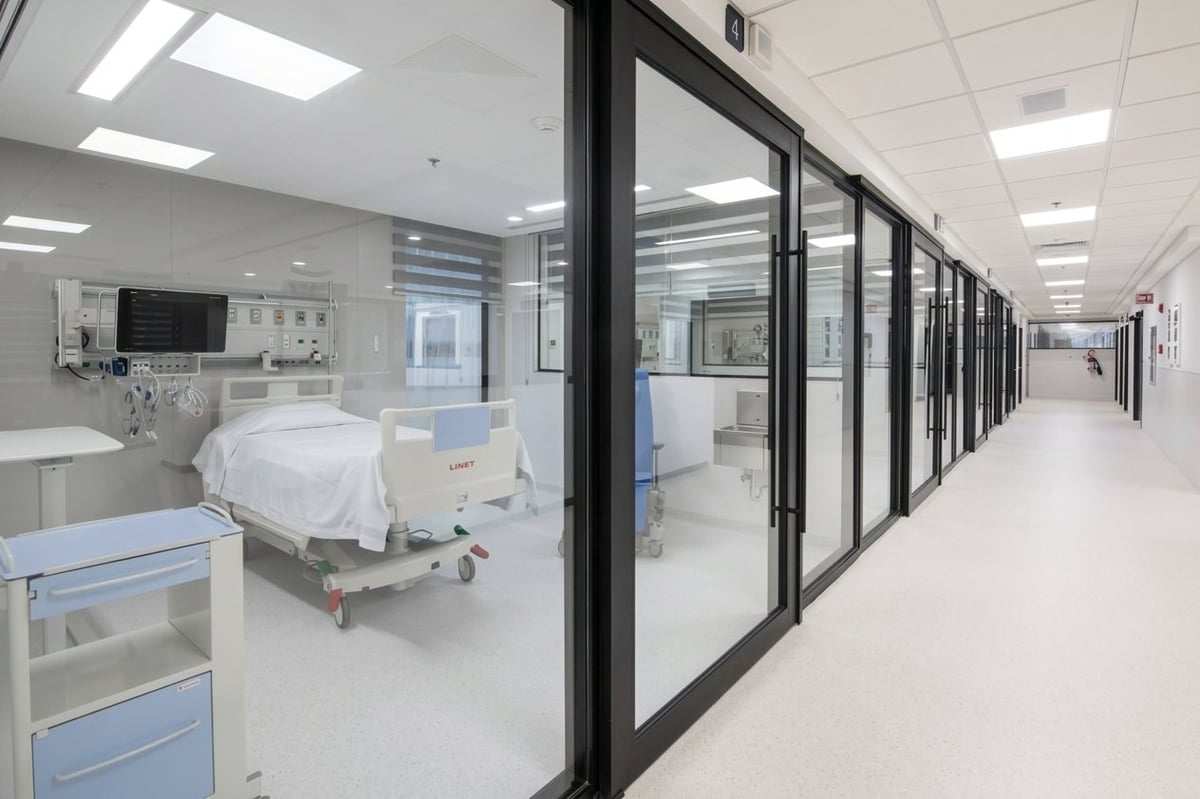
Smart film solves both problems at once. The glass remains an open, glazed surface, and privacy becomes a function of the glass rather than an object you have to move, clean and replace. It is the same underlying technology used across our commercial privacy glass solutions, adapted for clinical environments.
As with all switchable technology, the exact clarity, level of opacity and appearance depend on the specification of the particular film or glass. It is not one single product with one fixed result, so the application should always be matched to the needs of the department.
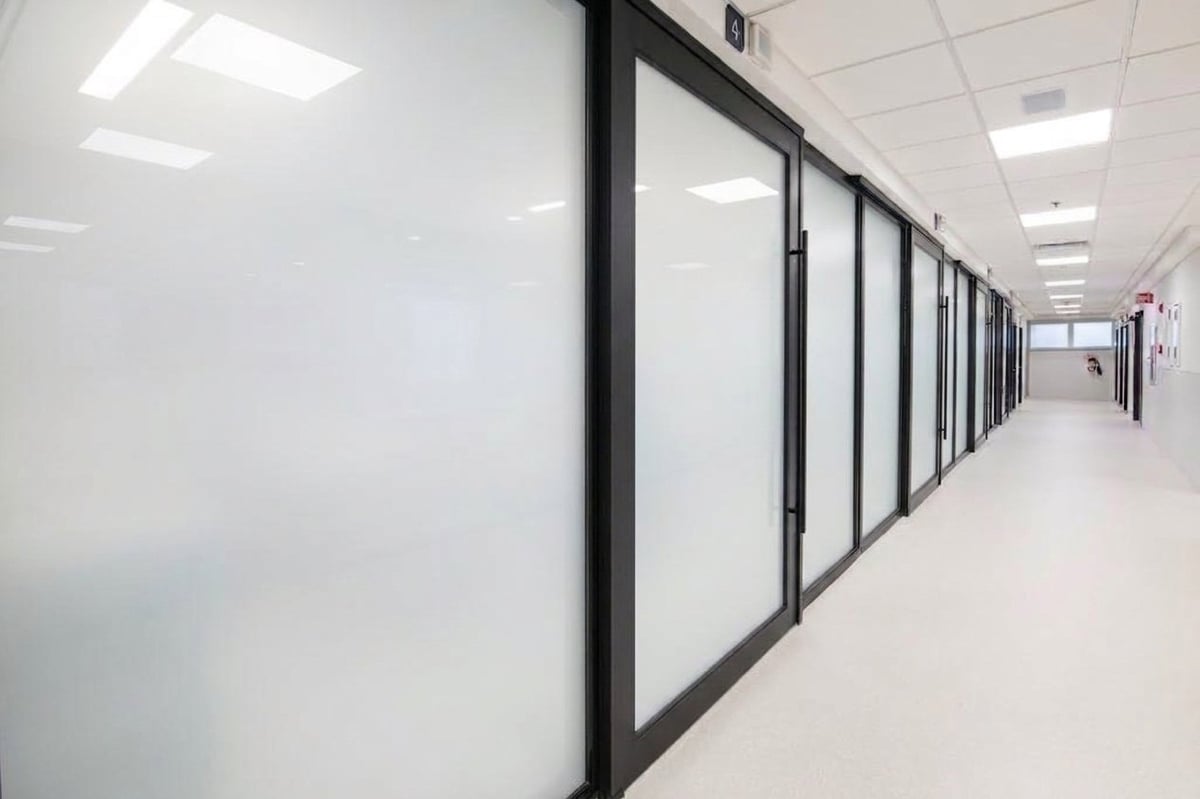
Most switchable privacy film is built around a technology called PDLC, which stands for polymer dispersed liquid crystal. The name sounds technical, but the idea behind it is simple, and that simplicity is one of the reasons it suits clinical environments so well.
Inside the film there is a layer of tiny liquid crystal droplets held within a polymer. When no power is applied, those droplets are arranged unevenly. Light hits them and scatters in every direction, so the glass looks frosted and you cannot see through it. This is the fail-safe state: if the power goes off, the glass becomes private, not visible.
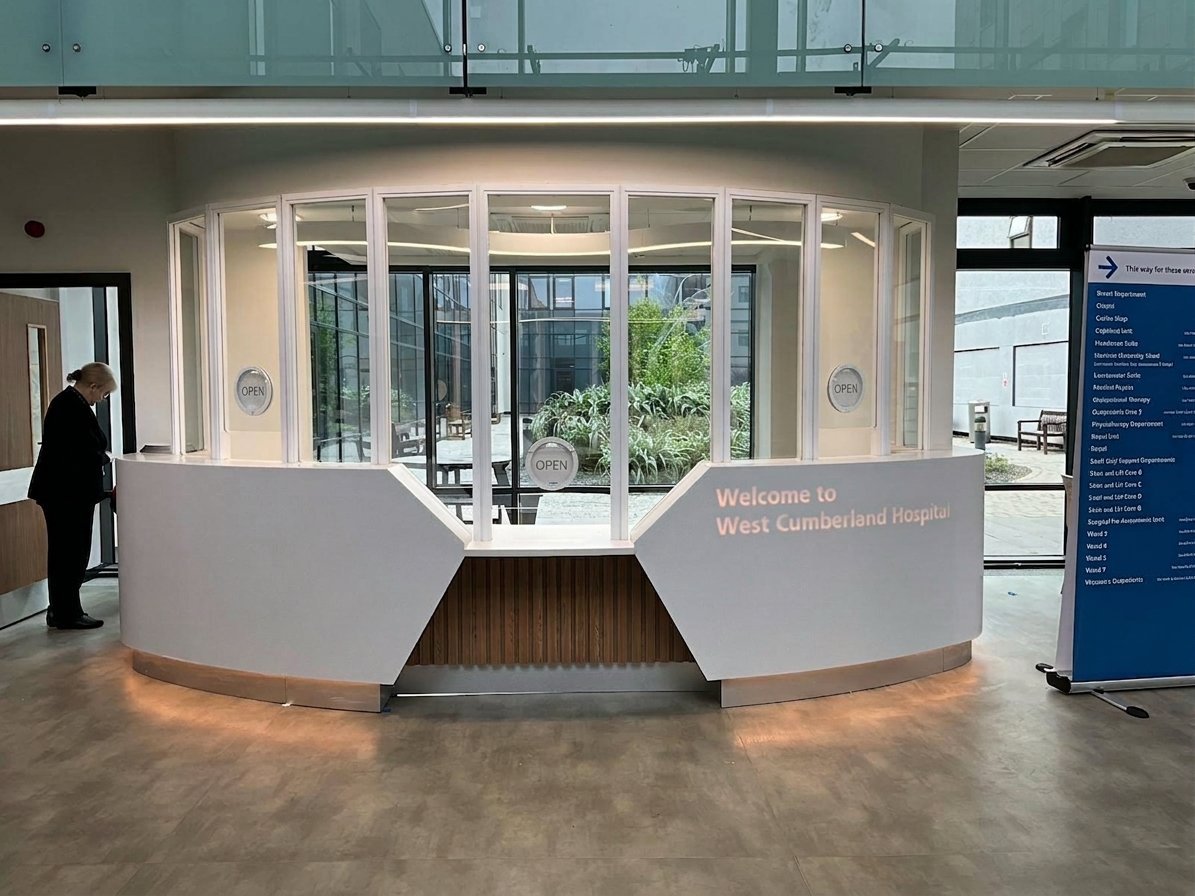
When a small electrical current is applied, the liquid crystal particles align and light passes through more directly, so the glass becomes clear and staff can see into the space again. The change is almost immediate, which is exactly what a busy ward or clinic needs. We explain the underlying technology in more detail in our guide to how intelligent smart glass works.
Control is where healthcare installations differ from domestic ones. A single room might use a bedside switch, a wall panel outside the door, a nurse-station control, or integration with a building management system so privacy states can be set as part of a care protocol rather than left to individual judgement.
The cubicle curtain is one piece of a wider picture. If you are weighing up whether switchable glass can replace traditional window treatments entirely, our article on whether switchable glass will replace curtains or blinds covers that debate in full. In healthcare the comparison is sharper because curtains carry specific clinical downsides.
| Feature | Privacy Curtains / Blinds | Smart Film for Healthcare Privacy |
|---|---|---|
| Speed of privacy | Manual, staff must cross the room and draw fabric | Instant at the touch of a switch |
| Infection control | Fabric harbours dust, bacteria and odours | Smooth wipe-clean glass surface, no fabric |
| Daylight and observation | Blocks light when drawn, hides the patient from view | Switch state can be chosen without losing daylight |
| Maintenance | Regular laundering, tracking cleaning, replacement cycles | Standard glass cleaning routine |
| Fail-safe behaviour | Fabric can be left open or tangled | Glass defaults to private when unpowered |
| Aesthetics | Bulk, gathers dust, dates quickly | Clean architectural glass with no loss of light |
The practical outcome is that smart film removes the object that has to be handled, cleaned and replaced, and makes privacy a property of the building rather than a piece of equipment on a rail.
Switchable privacy film suits a wide range of clinical spaces, but the reason for using it changes from one department to the next.
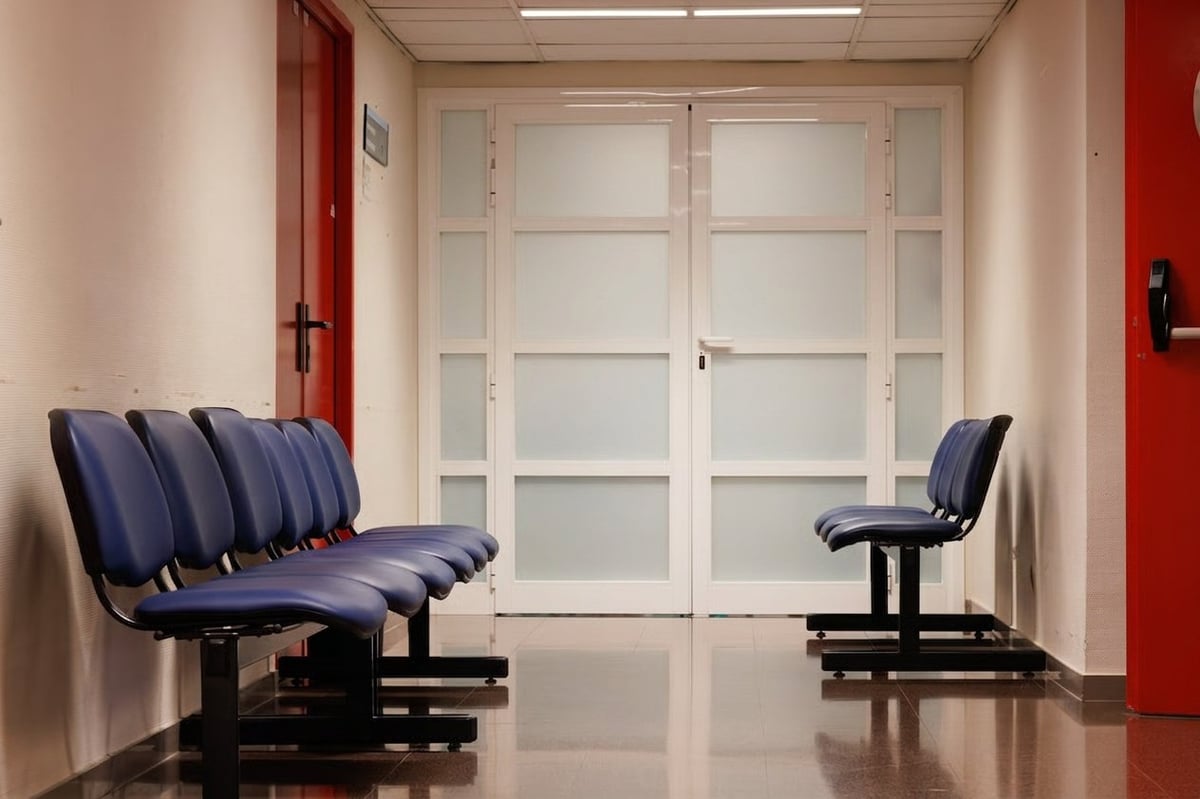
In bays and side rooms, the priority is dignity during personal care, examinations and family conversations. Smart film on internal glazing or a screen around the bed allows staff to make the area private in seconds without drawing a curtain that blocks light and traps dust. Because the default state is frosted, privacy is not dependent on someone remembering to draw anything.
Observation is preserved too. When privacy is not required, the glass returns to clear and staff can maintain visual oversight of patients at risk without entering the room.
GP surgeries, dental practices and outpatient clinics often use internal glass to bring light into corridors and reception areas. That same glass becomes a problem during an examination. Smart film lets a clinician switch the glazing to private at the point of need, then restore the open feel of the building afterwards.
Aesthetic clinics, dialysis units, fertility clinics and minor procedure rooms rely on confidentiality and a calm environment. Switchable film protects the patient during treatment while keeping the interior bright and professional between appointments. The same approach works for meeting and consultation rooms where sensitive conversations take place.
Seclusion, de-escalation and low-stimulus rooms benefit from glazing that can be made private without removing the observation window itself. A ligature-resistant, wipe-clean glass surface is also significantly safer and easier to manage than fabric in these environments.
In residential care, dignity matters during bathing, dressing and personal care. Switchable film on bathroom and en-suite glazing gives residents and carers control at the touch of a switch, and it is far easier to keep hygienically clean than curtains or blinds. Our guide to smart glass for showers and bathrooms covers the wet-area considerations.
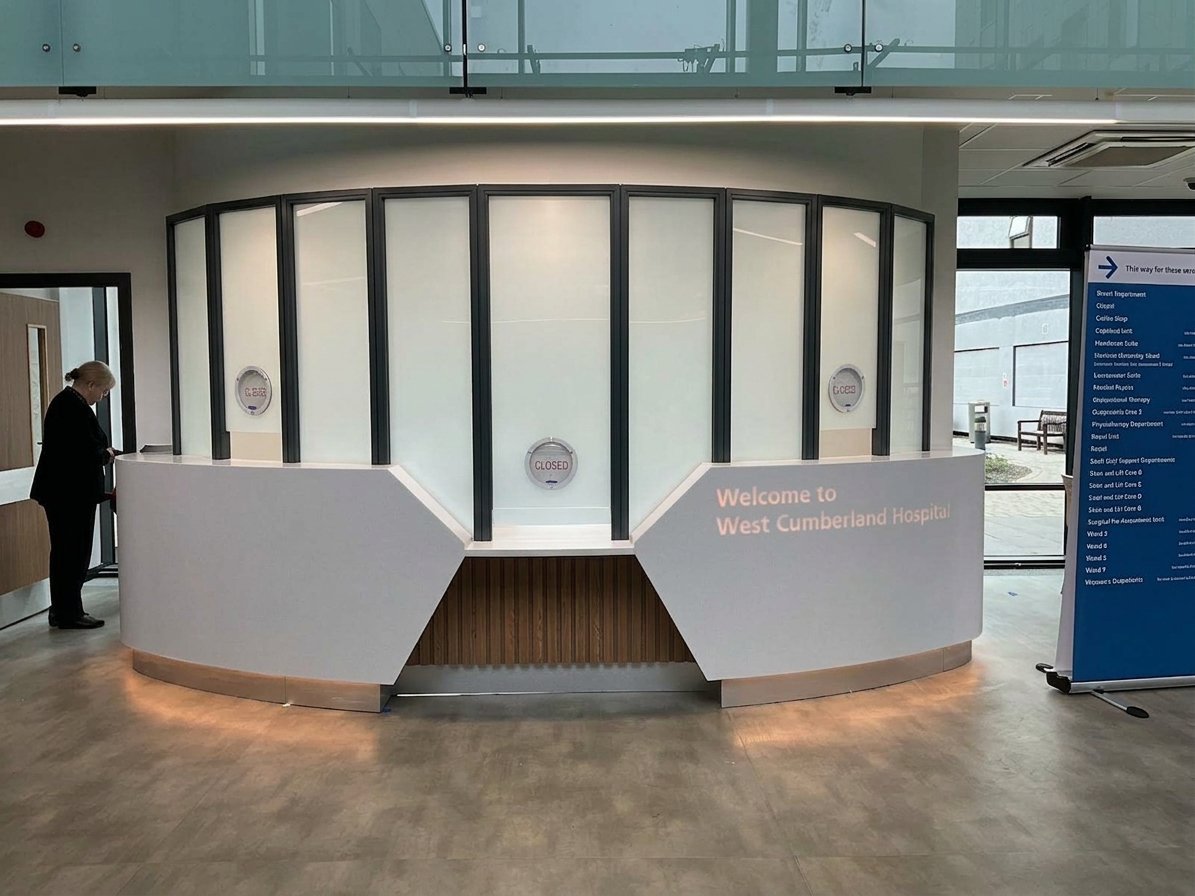
Reception desks, triage areas, staff rooms and handover spaces all involve conversations that should not be overheard or overlooked. Glazing can stay open and welcoming by default and switch to private when a confidential discussion begins, without a visible scramble for a meeting room.
The case for switchable privacy glass in healthcare rests on more than looks. Here are the practical advantages that matter day to day.
Privacy is available instantly, at the point of care, without a member of staff leaving the patient's side or asking them to wait.
Removing fabric curtains removes a known reservoir for dust, bacteria and odours, and simplifies cleaning protocols across a whole department.
Natural light reaches the space even when privacy is on, supporting patient recovery, staff alertness and a calmer atmosphere.
Staff can observe at-risk patients when appropriate and give privacy when required, without compromising either duty.
No laundering, no replacement curtains, no tracking repairs. The ongoing cost of ownership is a glass cleaning routine.
Switchable glass can also help manage solar heat and glare, which is relevant where clinical screens and daylight-sensitive patients are present. See our guide to whether smart glass is energy efficient.
In any healthcare project, privacy is only one part of the brief. The solution also has to stand up to clinical standards.
A sealed, easy-clean glass and film surface can be wiped down as part of routine cleaning. This is a direct contrast to fabric curtains, which must be removed, laundered, refitted and periodically replaced, and which can never be fully cleaned in place.
Because the unpowered state of PDLC film is frosted, privacy is the default. If power is interrupted, or the film is simply switched off, the glass becomes private rather than transparent. That is the opposite of the usual failure mode for a curtain left open.
Switchable film runs on a low-voltage supply, which keeps installations tidy and allows control equipment to be positioned out of the clinical workspace. Maintenance and electrical requirements should always be confirmed with the supplier and the project's electrical engineer. Our article on whether smart glass uses electricity explains the consumption figures.
Requirements for fire performance, impact safety, privacy regulations and ligature resistance vary between departments and by site. These should be specified at the design stage. For projects where technical performance has to be documented, our architects and specifiers page sets out the information available to design teams.
A balanced view helps more than a sales pitch, so here is the honest picture.
Where those trade-offs matter, they should be weighed against the ongoing cost and clinical risk of fabric curtains. For most projects the deciding factor is infection control and dignity rather than appearance. Our guide to whether privacy glass is worth it looks at the wider return on investment.
Smart film for healthcare privacy is best understood as a shift in how privacy is delivered, rather than simply a smarter version of a curtain. Privacy becomes a property of the glass itself: instant, consistent, cleanable and fail-safe, with daylight and visibility preserved.
Before specifying, think about the department, the people who will use the room, who should control the glass, what level of privacy is genuinely required, and how the installation will be cleaned and maintained. Those details matter far more than a brochure photograph.
If you are weighing switchable glass against curtains, blinds or standard filmed glazing, the honest question is what the space needs to do: protect dignity, support infection control, retain light, or all three. Once you know the answer, the right specification usually follows.
Planning smart film for a hospital, clinic or care setting? Get in touch with our team to discuss your glass, privacy requirements and installation.
Contact Us
Premium smart film and smart glass solutions for Yacht Owners, Architects, Businesses & Home Owners. Transforming your vision into the reality you've dream about.
© 2026 SmartGlassInnovations. All rights reserved.