

Glass is great for light, but it does little for privacy or glare, and the usual fixes like curtains or stuck on tint are permanent. Coloured switchable smart film changes when you give it power, so you can see straight through it one minute and switch to a tinted, private finish the next, whenever you choose.
In short, you get glass you can see through when you want to, and a tinted, private finish when you do not. All of it from the same pane.
Switchable smart film is a thin, electrically controlled film that can be applied to suitable glass surfaces. Apply a small electrical current and the film changes its visual appearance. Switch the current off and it changes back.
Most switchable film works with a straightforward clear and frosted effect. When the power is on, the glass looks fairly clear. When the power is off, the film turns frosted or opaque, which obscures the view through the glass.
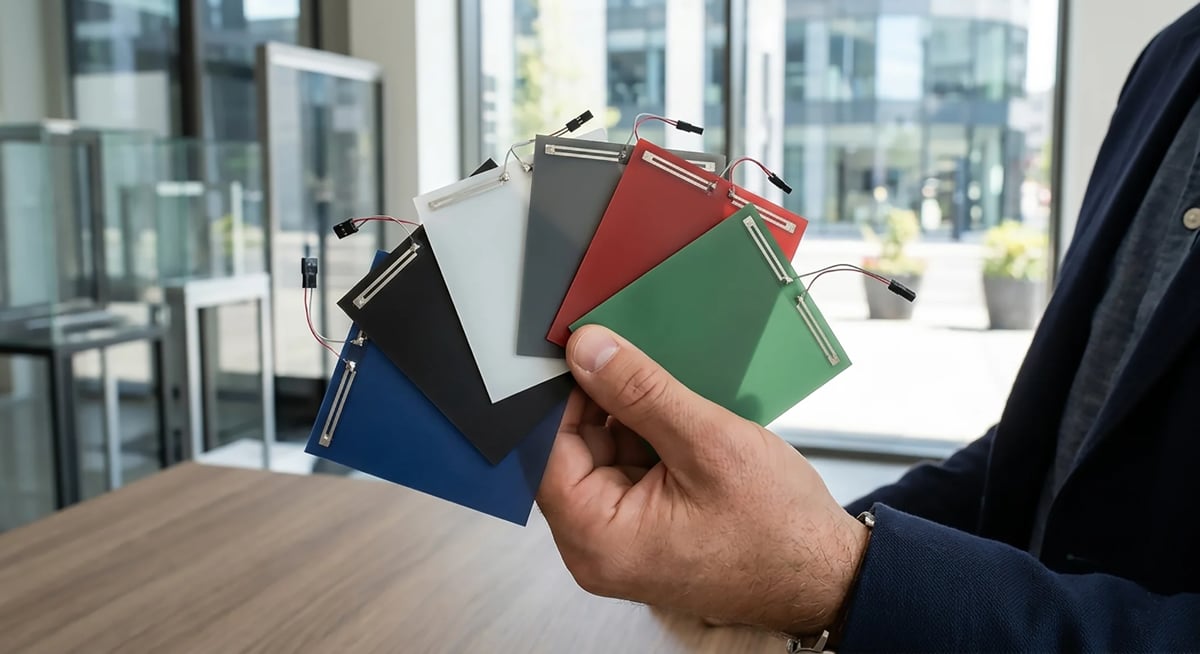
Coloured switchable smart film adds a tint or coloured appearance on top of that basic idea. Instead of only moving between clear and frosted, the film can carry a colour such as a dark tint, a grey tone, a bronze or warm shade, or in some cases a bespoke colour. The result is a switchable film that looks different from standard film even at a glance.
It is worth being clear from the start: the exact colour, the level of opacity, how much light passes through, and how the film looks when switched on or off all depend on the construction and specification of the particular film. Coloured switchable film is not one single product with one fixed appearance.
Most switchable smart film, including coloured versions, is built around a technology called PDLC, which stands for polymer dispersed liquid crystal. The name sounds technical, but the idea behind it is simple enough to explain.
Inside the film there is a layer containing tiny droplets of liquid crystal held within a polymer. When no power is applied, those droplets are arranged in a scattered, uneven way. Light hits them and scatters in different directions, which is why the film looks frosted or opaque and you cannot see clearly through it.
When an electrical current is applied, the liquid crystal particles line up in a more uniform way. This allows light to pass through more directly, so the film becomes clearer and you can see through the glass.
Coloured switchable film works on the same principle. The main difference is that a tint or colour has been built into or added to the film, so the overall look carries that colour whether the film is in its clear state or its frosted state. In plain terms, you get the same switchable behaviour, but with a tint or colour in the appearance of the glass.
The way coloured switchable film appears depends on the state it is in and on the light around it.
This is why photographs do not always tell the full story. A colour can look richer or duller depending on the camera, the screen you are viewing it on, and the lighting in the space.
Before committing to a large order, it is sensible to request a physical sample and hold it up against the actual glass and lighting in your room. A sample viewed in the real space is the most reliable way to judge how the finished film will look.
The colours available depend on the manufacturer and the way the film is made. It is best not to assume every colour is available from every supplier. Common options that some manufacturers offer include:
A dark or black tint is one of the most commonly requested coloured finishes, because it reads as a clean, modern look and pairs well with interiors where a strong contrast against the glass is wanted. Grey and bronze tones are often chosen for a softer, warmer appearance.
Bespoke coloured finishes can be more involved. They may require a different manufacturing process or a different specification than a standard clear to frosted film, which can affect both lead time and cost. If you need a specific colour, the sensible approach is to ask a supplier directly whether that exact colour is achievable in switchable form, rather than relying on a brochure.
The simplest way to understand coloured switchable film is to set it beside standard switchable smart film and look at what each offers.
| Feature | Standard Smart Film | Coloured Smart Film |
|---|---|---|
| Appearance | Clear when on, frosted when off | Tinted or coloured in both states |
| Privacy | Obscures the view when off | Obscures the view when off, plus a tinted look |
| Light transmission | Generally higher in the clear state | Reduced by the tint |
| Design options | Mostly a clear to frosted transition | Adds colour and tint choices |
| Typical applications | Privacy on demand | Privacy plus a particular visual style |
| Customisation | Cut to size and shape | Cut to size and shape, plus colour options |
In short, standard switchable film is mostly about controlling privacy. Coloured switchable film is about controlling privacy and introducing a specific look at the same time. For more on the basic technology, see our guide to switchable smart film and smart glass.
It is easy to confuse coloured switchable film with ordinary tinted window film, but they behave quite differently.
Ordinary window tint is normally a fixed, permanent or semi-permanent film. Once it is applied, the glass has that tint all the time. It reduces light and glare and can add privacy, but it does not change state. You cannot switch it clear and then tinted again.
Switchable film is designed to change its optical appearance when powered. A coloured switchable film carries a tint, but it also moves between a clearer state and a frosted state depending on the electrical current. So you get the colour, plus the ability to change how much you can see through the glass.
The practical difference comes down to what you need:
Neither option is automatically better. If you only want a steady tint, ordinary window film is usually the simpler and less expensive choice. If you want the colour and the ability to change the glass between a clearer view and privacy, switchable film becomes worth considering.
Switchable film does not replace every type of window tint, and it is not intended to. Solar control film, for example, is often chosen specifically for heat and glare management, and that is a different job from privacy and visual design. Your choice should follow the job you actually need doing. If managing heat and glare is your priority, see our guide to the best smart film for sun control.
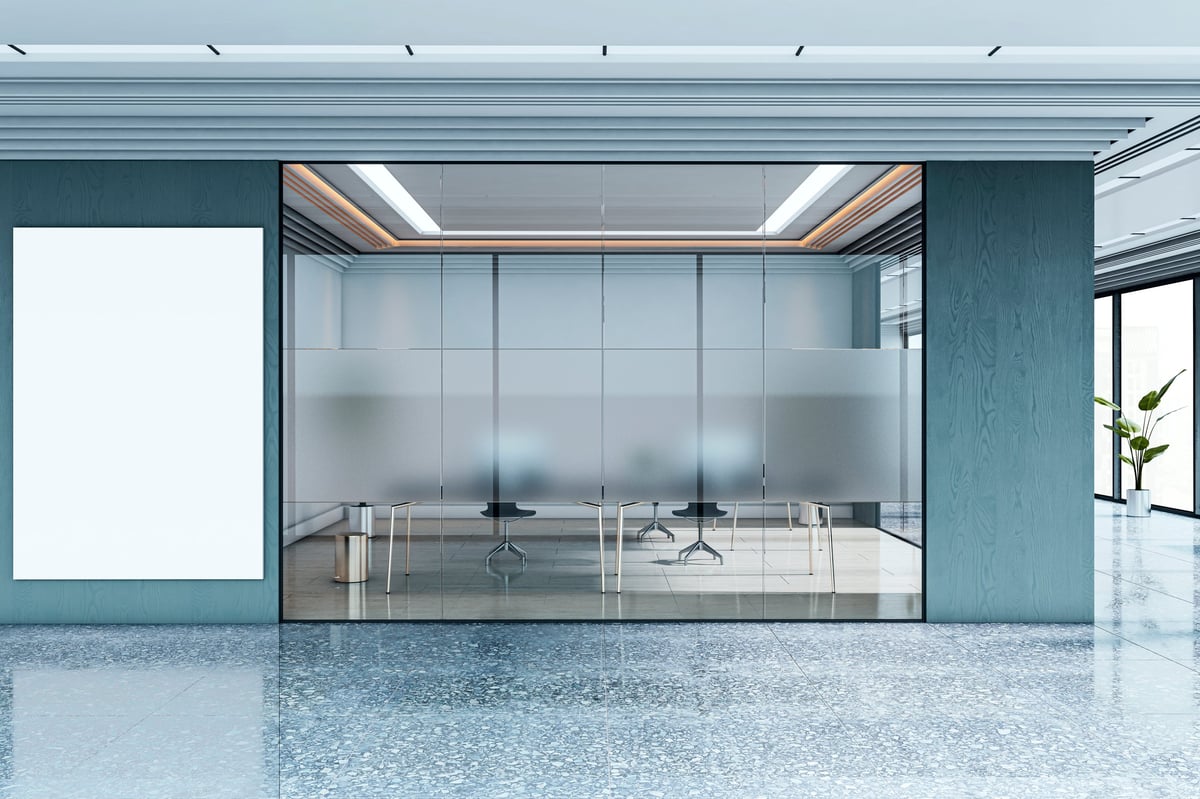
Yes, in many cases switchable smart film can be retrofitted to glass that is already in place. This is one of the main reasons people choose smart film rather than replacing glazing with new smart glass, which tends to be a bigger and more expensive job.
Self-adhesive switchable film is available for retrofit use. It is applied directly to the surface of suitable existing glass, so it works well when you want to add privacy and colour without removing the pane.
That said, not every pane is suitable. Whether coloured smart film can be fitted depends on a number of practical factors, including:
For this reason, the glass should be assessed before you order. Rather than assuming a pane can be treated, it is worth having a supplier check the surface, measurements and surroundings first. You can read more in our guide to installing smart film on existing windows.
Coloured switchable film suits a wide range of interiors, but the reason for using it changes from one setting to the next.
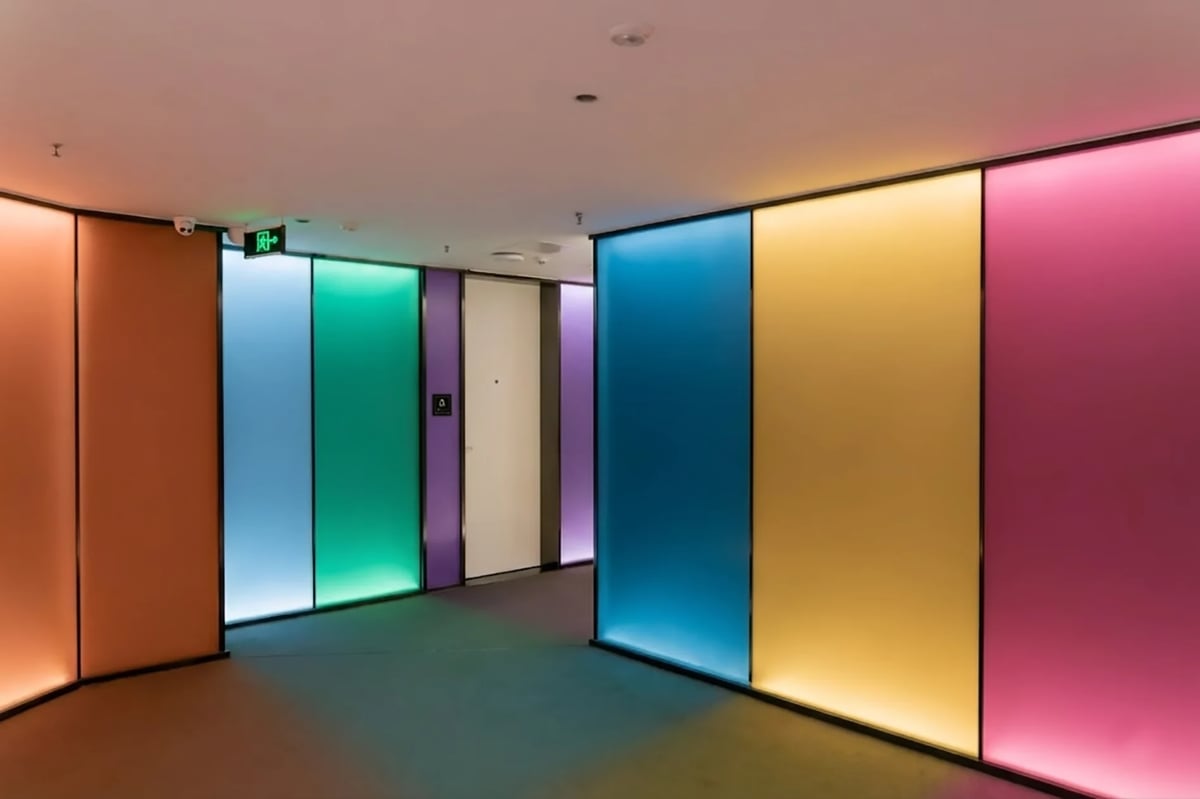
In living rooms and bedrooms, a coloured or dark tint can soften bright glass and add a more considered look to a window or internal partition. In bathrooms, switchable film is often chosen so the glass can be fairly clear when you want light and then frosted for privacy while the room is in use. A dark tint in a bathroom can also help the space feel more enclosed and private.
Home offices and internal glass partitions benefit in a similar way. The glass can stay open during the day and switch to private for a call or a meeting, with a tint adding a cleaner, more finished appearance than plain film.
Meeting rooms and boardrooms are a natural fit. Teams want the glass clear during normal working hours, then private during confidential discussions. We cover this in detail on our page about smart glass film for office meeting rooms. A coloured or dark tint can also give glass partitions, reception areas and executive offices a more distinctive, premium feel than standard clear film.
In shopfronts and display areas, coloured switchable film can create a bold visual feature that draws the eye. It can also be used on privacy screens or product displays where a retailer wants to reveal or conceal an area at the touch of a switch.
Hotels use switchable film in bathrooms and between bedroom and living areas, where a guest can change the glass from clear to private. A coloured finish can elevate reception glazing or feature panels, giving the interior a more designed, high-end feel without sacrificing the switchable privacy function.
Showrooms, clinics, restaurants, bars and exhibition spaces all use glass to control how a space feels. A coloured tint can reinforce branding, create atmosphere, or simply help a room feel more intentional. In every case, the helpful question to ask first is what the glass needs to do: change privacy, change the look, or both.
The honest answer is that it depends on the film specification and the state the film is in.
Switchable film is often used to change glass from a more transparent appearance to a more private, frosted appearance. In the frosted state, the glass obscures the view, which is enough for many privacy needs such as a meeting room, a bathroom or a changing area.
Performance varies between products, however. The level of haze, the transparency when powered, and how well the frosted state hides what is behind it all differ from one film to the next. It is best not to promise yourself complete visual privacy without checking the exact product specification first. If total privacy is essential, confirm it with the supplier before ordering rather than assuming. Lighting also plays a big part — read our guide to whether people can see through smart glass at night to understand how privacy changes after dark.
This is one area where customers often find themselves confused, so it is worth addressing carefully.
A dark or black tint can reduce the amount of visible light passing through the glass, and it can certainly make a room feel darker and more private. But a true blackout effect, meaning almost no light comes through at all, should not be assumed from a dark tint alone.
It helps to separate four related but different ideas:
If you need a genuine blackout, such as for a bedroom or a media room, you should not assume that a dark switchable film will do the job on its own. Confirm the expected light transmission with the supplier and consider whether blackout blinds or curtains would give the result you actually need. For more on how switchable glass compares with traditional window coverings, see will switchable glass replace curtains or blinds?
There is no single fixed price for coloured switchable smart film, and it would be misleading to quote one. The cost depends on a number of factors that change from project to project:
Because of this, a generic price per square metre is often not very useful on its own. A better approach is to request a quote based on your actual measurements and some photographs of the glass. That gives a supplier enough to give you a realistic figure rather than a guess.
For a broader look at what affects the cost of these systems, see our guides to how much smart film costs to install and how much smart glass costs.
The answer depends on what you are trying to achieve, so it is worth being honest about who benefits and who might be better off with something simpler.
Coloured switchable film tends to suit people who want a particular tinted look and the ability to change the glass between a clearer view and privacy. Designers, hotel operators, office managers and homeowners working on feature glazing or privacy glass are often in this position.
If you only want a constant tint with no need to switch the glass, conventional tinted film is usually the more sensible and less expensive option. If you only want privacy and do not care about a colour, standard switchable smart film or even blinds or curtains may be all you need.
The key is to match the solution to the job. Coloured switchable film is at its best when privacy control and a specific visual appearance are both genuinely wanted. If only one of those matters to you, there is probably a simpler route. For a balanced look at whether switchable privacy glass pays off in the first place, read our page on whether privacy glass is worth it.
A good supplier should be able to answer these questions clearly. If any of them get a vague answer, that is a sign to ask again before you commit.
A balanced view helps more than a sales pitch, so here is the honest picture.
Coloured switchable smart film is best understood as a combination of privacy control and visual design, rather than simply another type of window tint. The colour gives the glass a particular look, while the switchable technology lets you change how clear or private the glass is at any moment.
Before choosing a specification, think about the glass itself, the room, the lighting, how much privacy you actually need, and the exact colour you are after. Those details matter more than any brochure photo.
If you are weighing up coloured switchable film against standard switchable film or ordinary tint, the honest question is whether you need the colour, the switchable control, or both. Once you know the answer to that, the right product is usually easy to pick.
Thinking about coloured switchable smart film for your project? Get in touch with our team to discuss your glass, preferred colour and requirements.
Contact Us
Premium smart film and smart glass solutions for Yacht Owners, Architects, Businesses & Home Owners. Transforming your vision into the reality you've dream about.
© 2026 SmartGlassInnovations. All rights reserved.