

How intelligent smart glass and switchable smart film turn a normal shopfront into a display that changes in seconds, and what that means for footfall, foot traffic and sales.
Here is the whole idea in one paragraph. Intelligent smart glass and smart film let a shop window change in seconds, going from a clear view of the products inside to a frosted, glowing backdrop that hides the stock and shows off a message instead. No shutters, no paper posters, no staff member clambering up to swap vinyl. You press a switch, tap an app, and the window is something else before a passer by has walked past. That single trick does three jobs at once: it protects your display, it earns attention on the street, and it lets a shop keep selling after the doors are locked. The rest of this article unpacks how it works, where it pays off, what it costs, and the honest limits nobody mentions on the sales sheet.
In short, the window stops being a fixed piece of display space and becomes a screen you can control. Clear when you want to be seen, private or promotional when you do not.
Smart glass, sometimes called intelligent glass or switchable privacy glass, is glass that changes its appearance when it is given power. The version most shops use is based on PDLC film, a layer of liquid crystal sandwiched or applied to the glass. With no current running through it, the crystals scatter light and the pane looks frosted. Give it a small voltage and the crystals line up, the scattering stops, and the glass becomes clear.
In a retail setting that clear and private behaviour is only half the story. What matters to a shop is the speed. A window can go from a display you want everyone to see to a display you want nobody to see in the time it takes to flick a switch. There is no curtain to draw, no shutter to pull down, and nothing that looks like the shop has simply closed for the day.
The same technology can also carry a tint or a colour, which is where it starts to look less like a privacy product and more like a design feature. If you want the background on coloured and tinted versions, our guide to coloured switchable smart film explains what is available and how the different finishes behave.
The change is much simpler than it sounds. There is no mechanical part to wear out and nothing moves. The glass itself does the work.
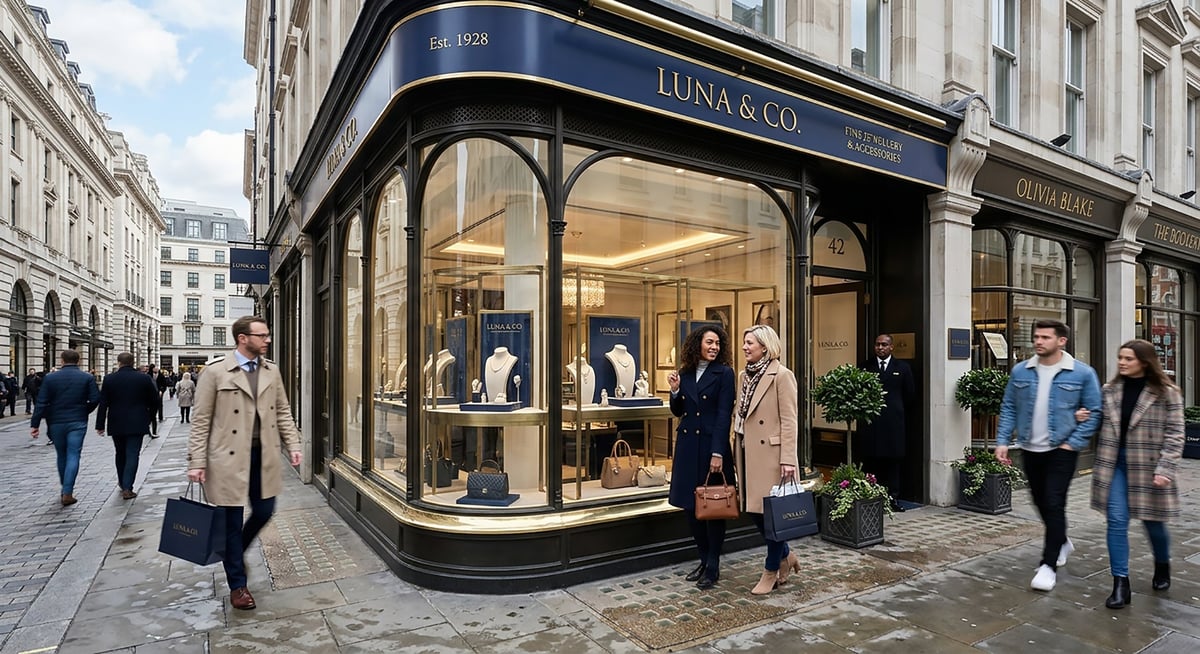
When power is applied, the liquid crystals align and the pane turns clear. Shoppers on the street see straight through to the display inside, the way they would with ordinary glass. This is the state you use during trading hours, at launch events, and whenever the point is to be seen.
Take the power away and the crystals fall out of alignment, scattering light in every direction. The glass goes frosted, a soft, even, milky finish. From the street you see a glowing panel, not a shop full of stock. Behind the glass, staff can still work, stock can be moved, and the shelves can be reset, all without an audience.
This is where retail gets interesting. Frosted glass is a bright, blank surface, and bright blank surfaces take light and projection beautifully. A projector or rear screen can throw a campaign onto the frosted pane, so the window becomes a message board at night. Switch it back to clear in the morning and it is a normal shop window again.
Some retailers take that further and combine smart glass with LED display glass or transparent screens. That pair is worth reading about on its own if you want moving content rather than a static campaign.
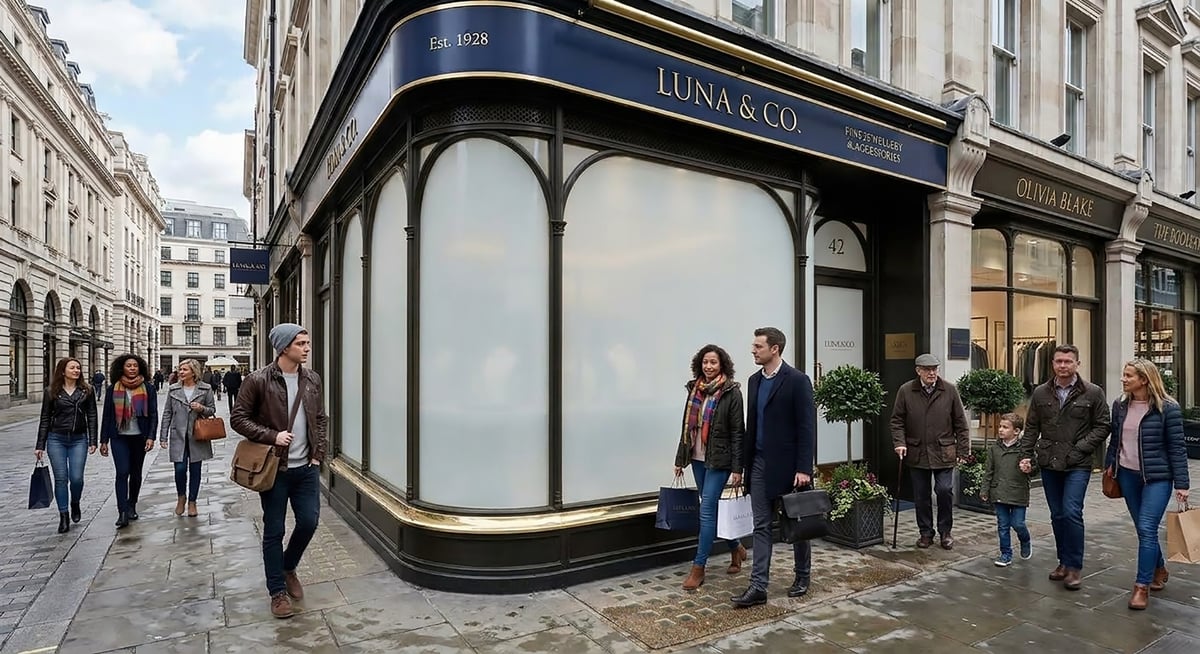
There are two ways to get this effect into a shop, and the choice usually comes down to whether the glazing is being replaced or kept.
| Feature | Switchable Smart Glass | Switchable Smart Film |
|---|---|---|
| What it is | The switching layer built into the glass during manufacture | A self-adhesive film applied to glass that is already fitted |
| Best for | New shopfronts, refits and bespoke glazing | Retrofits where the existing glazing stays in place |
| Disruption | Glazing has to be removed and replaced | Applied to the glass with the shop still trading |
| Finish | Usually the cleanest, most integrated look | Very close, though an edge can often be seen |
| Typical cost | Higher, because you are buying new glass | Lower, because only the film is new |
| Maintenance | Cleaned like ordinary glass | Care needed around the film edges and wiring |
In practice, most shops that already have a decent pane of glass choose film, because it does not force a full refit. Shops doing a bigger refurbishment, or dealing with glass that is old or unsuitable, tend to go for proper switchable glass. For a fuller comparison, see our guide to smart glass vs smart film.
It helps to set the new approach beside the old one and see where each wins.
| Consideration | Traditional Display | Smart Glass Display |
|---|---|---|
| Changing the window | Staff, ladders, vinyl and posters | A switch, a remote or an app |
| Out of hours | Stock on show or shutters down | Frosted, then used as a promotional surface |
| Security | A clear view of your stock for anyone looking in | Products hidden when the glass is frosted |
| Street appeal | Static, and soon familiar to regulars | Can change by day part, day of week or campaign |
| Staff time | Regular dressing and cleaning of the glass | Very little once installed |
| Upfront cost | Low | Higher, and it needs a power feed |
Neither option is wrong. A small independent shop with one window and a tight budget may well be better off with posters. A shop with a big glass frontage, a security concern, or a brand that wants to make an impression on a busy street usually finds the switchable version earns its keep.
Most owners are not buying the technology for its own sake. They are buying a specific outcome, and the same handful of outcomes comes up again and again.
A big clean window is a free shop for anyone walking past. Frosting the glass at night hides what is on the shelves, and unlike a shutter, the shop still looks open and lit rather than boarded up.
A window that changes catches the eye in a way a static one cannot. Frosting and clearing on a timer, or in response to movement on the pavement, is enough to make people stop and look.
Once the glass is frosted it is a blank, brightly lit surface. Use a projector and the shop keeps talking to the street long after the door is locked. That is a display that works a night shift for free.
South facing windows bake the staff and bleach the stock. A tinted film cuts glare and UV while still letting in light, which protects garments, packaging and print. We go into the numbers on our page about smart film for sun control.
Vinyl graphics, printed panels and seasonal dressing all cost money every time they change. A switchable pane is paid for once and then reused again and again, which tends to look better on the books over a few years.
The technology suits a wide range of retail settings, but the reason for using it changes from one to the next.
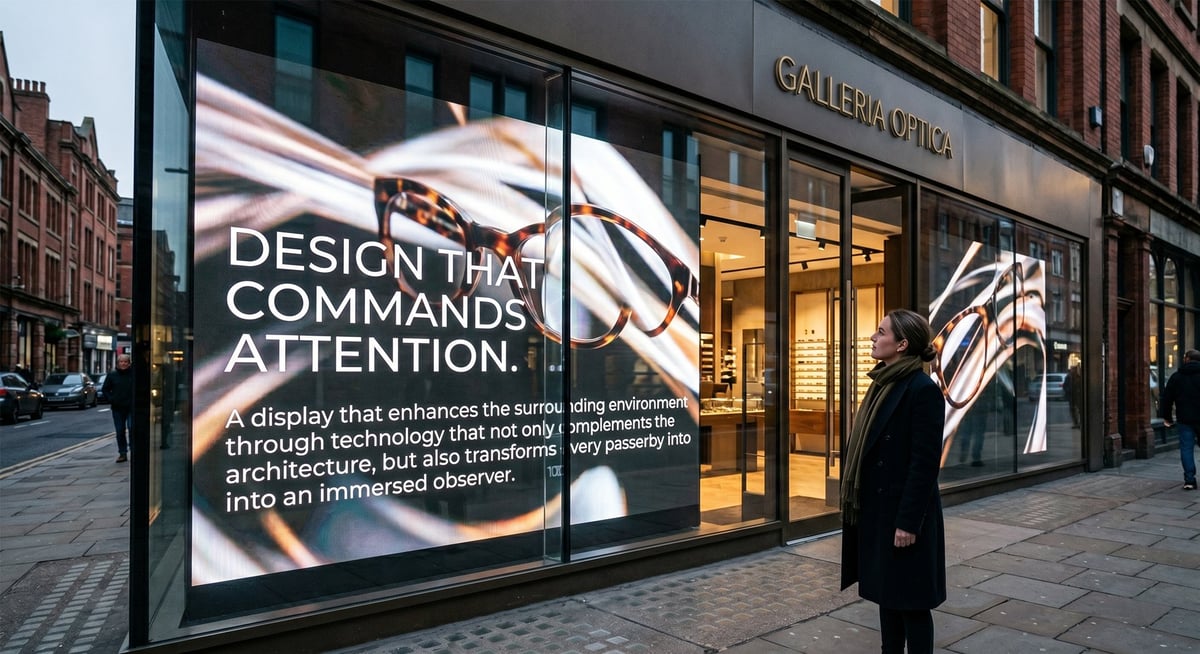
Fashion windows live or die on how they look at a glance. A switchable pane lets a shop run a different look for the morning and the evening without anyone touching it, and lets the team reset the mannequins in private before the doors open.
Anywhere the stock is expensive is a place where showing it to the street after dark is a risk. Frosting the glass overnight keeps the window lit and friendly while taking the contents out of sight, which is a gentler look than a metal shutter.
Large glass frontages are costly to cover and awkward to dress. A switchable screen can hide the cars from prying eyes, cut the glare that ruins a photo of the forecourt, and still open up to a wide clear view for a launch.
These spaces want a clear window in the day and a little softness at night. Frosting the lower panes turns a fishbowl into a room with some atmosphere, without blotting out the street completely.
A temporary unit, run by a person who plans to move on. A film can usually be removed and taken to the next site, which makes it more attractive than a permanent structural change. If you sell to other businesses, our commercial solutions page covers the wider set of applications.
There is no single figure, and anyone who quotes you a flat price per window before seeing the glass is guessing. What drives the number is fairly consistent, though.
As a rough rule, film on an existing pane sits at the lower end, and full switchable glass at the higher end. Either way, the sensible middle step is a quote based on your own measurements rather than a number from a blog. For the fuller picture on pricing, our guide to how much smart glass costs goes into the detail, and there is a separate breakdown for smart film installation.
Running costs, on the other hand, are almost an afterthought. The film only draws power when it is switched to clear, so a window that sits frosted all night costs close to nothing. We explain the figures in our article on whether smart glass uses electricity.
A balanced view helps more than a sales pitch, so here is the honest picture.
The single biggest cause of disappointment is a vague conversation with a supplier. Ask these questions before you commit and you will know exactly what you are buying.
Smart glass in retail is not really about the glass. It is about controlling what the street sees, and when. The window stops being a fixed piece of shopfitting and becomes something you can actually manage: clear when you want to draw people in, frosted when you want to protect the stock or reset the display, and lit up with a message when the doors are closed.
The technology is well proven, the running costs are tiny, and the biggest decision is usually film on your existing glass or new switchable glazing. Get that right, along with the electrical side and the controls, and the rest tends to follow.
If you are weighing up smart glass against shutters, vinyl or a new glazing package, the honest question is simple. Does your window need to change, or does it just need to be covered? Once you know the answer to that, the right product is much easier to choose.
Thinking about smart glass or switchable film for your shopfront? Get in touch with our team to talk through your windows, your security and the look you are after.
Contact Us


Premium smart film and smart glass solutions for Yacht Owners, Architects, Businesses & Home Owners. Transforming your vision into the reality you've dream about.
© 2026 SmartGlassInnovations. All rights reserved.