

If you only read one paragraph, read this one. Intelligent glass and film for hotels lets a single pane of glass change from clear to private at the touch of a switch, which means bathrooms, bedrooms and living areas can stay bright open when guests want them open and turn completely private the moment they need a little seclusion. There is nothing to pull closed, no dusty curtains to replace, no blinds that rattle and no guest left wrestling with a badly fitted track. The glass does the work, quietly, and the room feels more expensive because of it. For hoteliers, that translates into fewer complaints about privacy, a sharper looking product to sell, less maintenance and a feature guests actually mention in reviews. The rest of this guide breaks down exactly how smart glass and smart film compare, where each is used, what it does to the guest experience, what it costs and where the honest limits sit.
In short, you get a room that can look wide open to the view one minute and feel entirely private the next, without a single curtain in sight.
Intelligent glass, sometimes called switchable glass or privacy glass, is glass that changes its appearance when electricity is applied to it. Smart film does the same job but comes as a thin, self adhesive layer that is fitted to glass you already have. Both use the same core technology, and both let a window or partition switch from clear to frosted, or from clear to a tinted private finish, on demand.
In a hotel setting, that ability matters more than in almost any other building. A guest room is a private space that also needs to feel open, light and inviting. A hotel bathroom is, by tradition, either a closed box or a glass-walled feature that offers no privacy at all. Intelligent glass and film solve both problems at once, because the same glass can be part of the design when it is clear and a private wall when it is switched.
It is worth being clear about one thing from the start. Hotels do not buy this technology because it is clever. They buy it because it removes a small, constant friction from the guest's day, and removes a recurring cost and cleaning job from the housekeeping team. The technology is the enabler, not the point.
If you want the full technical grounding first, our guide on how intelligent smart glass works covers the mechanics in detail. This page stays focused on hotels and what the technology does for guests and operators.
Switchable glass and film are built around a technology called PDLC, which stands for polymer dispersed liquid crystal. The name is technical, but the idea is genuinely simple. Inside the material there is a thin layer holding countless tiny droplets of liquid crystal suspended in a polymer. When no power is applied, those droplets sit in a scattered, uneven pattern. Light hits them and bounces in all directions, which is why the glass looks frosted and you cannot see through it. Apply a low voltage current and the droplets line up in one direction. Light passes through cleanly and the glass becomes clear.
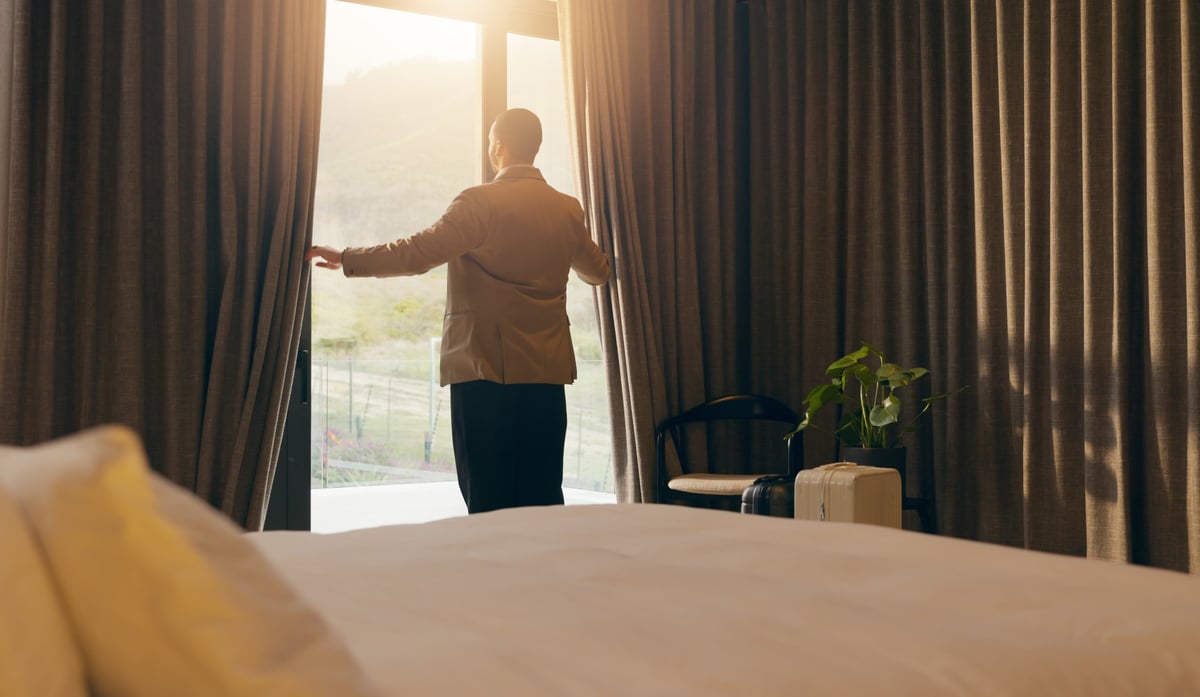
That is the whole principle. In a hotel, the practical detail is how it is controlled. A guest can switch the glass from a simple wall panel next to the door, or from a remote, or as part of the room's existing lighting control system. Some properties link it to the room management system so that the bathroom glass defaults to private when a room is occupied or resets to clear between guests.
The glass itself draws very little power, and only when it is held in one state. That matters in a building with hundreds of rooms, because a small saving per room adds up. If you want the detail on running costs, our article on whether smart glass uses electricity breaks down consumption honestly, including what it does and does not cost to run.
There is also a comfort benefit that hoteliers notice once it is fitted. Because the glass can be held in a frosted state on a bright day, or in a clear state when the sun would otherwise be blinding, it gives guests a simple way to manage both privacy and glare without closing a curtain and losing the view. Our guide to the best smart film for sun control explains how well it handles heat and glare, which is a particular concern for south facing suites and rooftop glazing.
The two options look similar in use, but they are bought and installed in very different ways. For a hotel, the right choice usually comes down to whether you are building, refurbishing or upgrading rooms that are already open.
| Feature | Smart Glass | Smart Film |
|---|---|---|
| What it is | Switchable technology built into the glass itself | A self adhesive switchable film fitted to existing glass |
| Best for | New builds, full refurbishments and feature glazing | Upgrading existing rooms with minimal disruption |
| Installation | Glass is made to order and installed like any pane | Applied on site to glass already in place |
| Downtime per room | Higher, suited to planned closure periods | Low, rooms can often be done between stays |
| Appearance | Cleanest finish, glass and switch are one unit | Very close to glass, with a discreet edge detail |
| Typical route | Specified at design stage | Retrofit decision made during operations |
As a rule, if the glass is being ordered anyway, smart glass gives the tidiest result. If the rooms already exist and you want the upgrade without closing the floor, smart film is usually the faster and more practical route. We go deeper on the trade offs in smart glass versus smart film.
Most hotel technology is invisible when it works and annoying when it does not. Switchable glass is different because guests interact with it directly and enjoy it immediately, even if they never think about how it works. A few things change the moment it is in place.
A guest checks in after a long journey. What they want from a room is to feel settled and unseen while they shower, change or simply sit still. With switchable glass, the bathroom or bedroom partition turns private with one tap, and the guest never has to wonder whether a curtain is fully closed. That small certainty removes a quiet, nagging discomfort that many guests feel in glass-walled rooms.
The usual way to make a space private is to cover the window, and the usual casualty is the view. Switchable glass lets a room stay open to the coastline, city or garden while still giving privacy where it is needed. On a luxury stay, that preserved connection to the view is part of what the guest is paying for, and it is exactly what curtains take away.
Curtains and blinds are also dust collectors, and they are fiddly to clean properly. Removing them from a bathroom or between the bedroom and living area cuts a housekeeping task and gives the room a cleaner, more modern line. Guests notice the calm of a space with fewer moving parts, even if they cannot say why it feels calmer.
There is a marketing dimension too. Switchable bathrooms photograph beautifully and read as modern luxury, and guests who enjoy a feature tend to mention it in reviews. If you are unsure whether it belongs in a bedroom, a bathroom or an entire suite, our guide to whether switchable glass will replace curtains and blinds is a useful sanity check on how far it can go.
A hotel is many spaces in one building, and the reason for using switchable glass or film changes from one area to the next in a second. Give your guests a premium experience that they will remember and share for years.
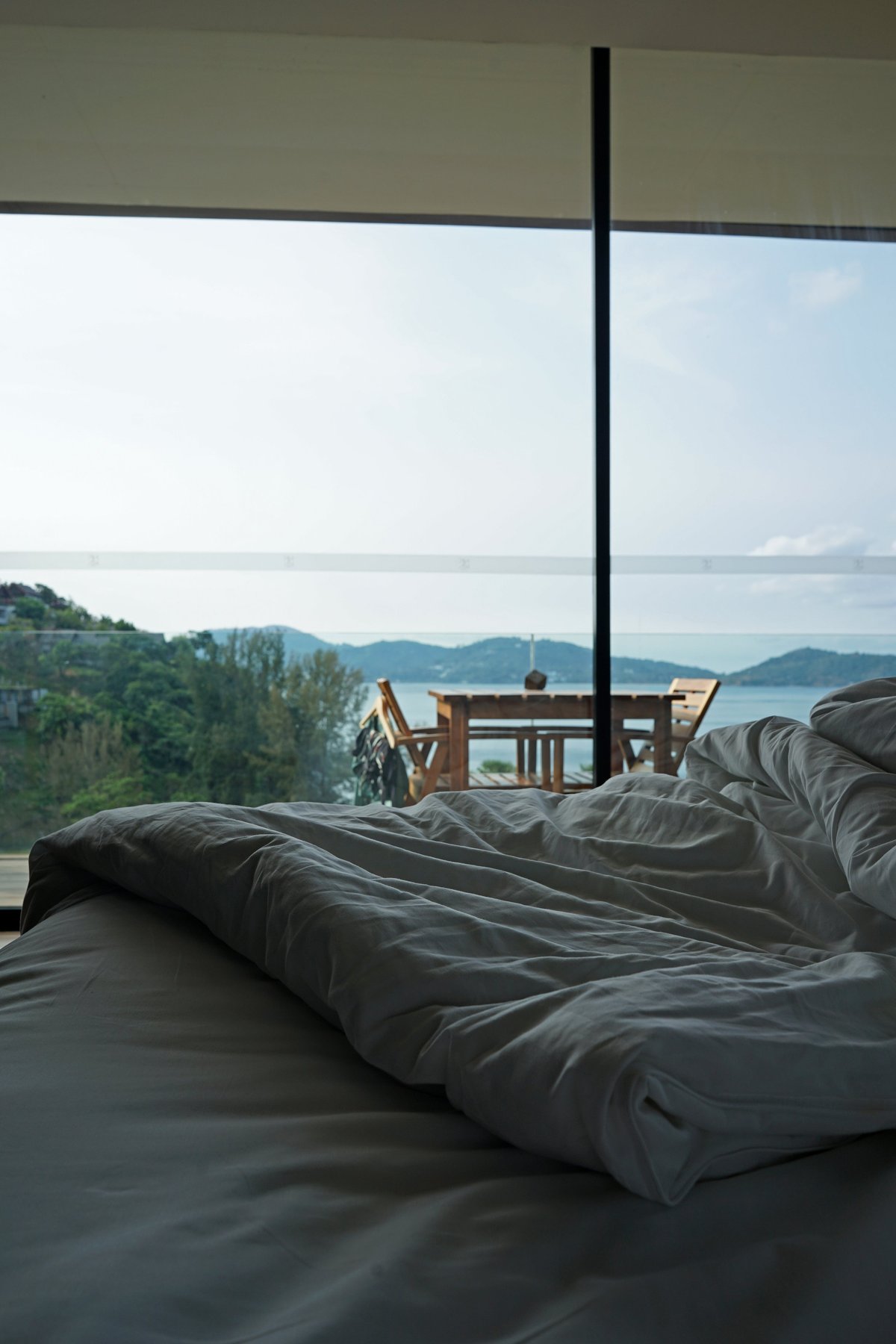
This is the most common hotel application by far. Glass bathrooms have become standard in modern design because they make a compact room feel larger and brighter, but they raise an obvious privacy question. Switchable glass answers it without the guest having to find and pull a blind. We cover the detail, including wet area considerations, in our guide to smart glass for showers and bathrooms.
In a suite with a sleeping area, a sitting area and a bathroom that all share one glass line, switchable glazing lets the guest divide the space when they want to. A family suite can turn from open to private in seconds. A couple can keep the bathroom bright all day and private when in use. Neither arrangement relies on a curtain that gets pulled apart or left hanging open.
Public areas use switchable glass for a different reason. A meeting or event space can be visible and welcoming one moment and screened off for a private function the next. A glass-fronted office or back of house area can be opened up or closed down at the flick of a switch. It gives a hotel flexible square footage without permanent walls.
Dining rooms, bars and spa areas use glass to control atmosphere. Screens between tables, glazed spa treatment rooms and glass partitions around private dining can all switch between open and private without breaking the design. A tinted or coloured switchable finish can also reinforce a brand palette in these spaces, which is a topic in its own right and covered in our guide to coloured switchable smart film.
A spa only works if guests feel completely at ease, and that begins with privacy. Switchable glass lets treatment rooms, relaxation lounges and changing areas move between an open, airy feel during the day and a fully private setting for a treatment, without anyone pulling a curtain or leaving a blind half closed. The same glass that gives a bright, welcoming space in the morning can become a calm, secluded room in seconds. Because these are warm, humid spaces, the specification matters, and our guide to smart glass for showers, bathrooms and saunas covers what is needed in wet areas.
A pool hall is often the biggest glazed space in a hotel, which brings two challenges at once. Guests want the light and the view while they swim, but they also want to step out of the water without feeling exposed. Switchable glass handles both, turning a wall of windows private when it is needed and keeping the pool bright and open the rest of the day. It also helps with glare and heat on a sunny poolside, which is covered in our guide to the best smart film for sun control.
Where a hotel has extensive glazing on a roof terrace or an exposed facade, the question of whether the technology can be used outside comes up quickly. It can, with the right specification. Our article on using switchable smart glass outdoors sets out what the conditions require and where the limits are.
Luxury in hospitality rarely comes from one big gesture. It comes from a series of small things that all feel considered. Switchable glass is one of those things, because it removes visible clutter and replaces it with a clean, quiet surface that behaves exactly as the guest expects.
Compare a glass bathroom with a curtain and a blind to the same bathroom with switchable glazing. The second version has fewer edges, no fabric, no track and no question about what is or is not closed. The room reads as more architectural. That is the effect that makes a space feel expensive.
There is also freedom in the finish. Standard switchable glass moves between clear and frosted, which suits a neutral, understated scheme. A coloured or dark tinted version can carry a stronger design idea, so a hotel can use a bronze, grey or bespoke tint to match a signature palette without giving up the privacy function. For a brand that relies on atmosphere, that combination of look and control is difficult to replicate any other way.
Privacy is not the only comfort measure a hotel can install, but it is one of the most noticeable. If you are weighing the wider question of whether this kind of glass earns its place in a property, our piece on whether privacy glass is worth it looks at value rather than features.
For specifiers and designers working on a hotel project, the technical detail matters as much as the look. Our page for architects and specifiers covers the specification side, and our commercial solutions page sets out how the technology is applied across hospitality and other sectors.
The guest experience is the visible benefit. The operational benefits are the ones that usually decide whether a project goes ahead.
None of these benefits require the guest to learn anything. That is the point. The technology sits in the background, removes a small amount of friction, and improves how the room is perceived.
There is no single price, and any hotelier who has been quoted a headline figure per square metre will know how quickly the real number changes. The main factors are:
For a realistic sense of the numbers, our guides to how much smart glass costs and how much smart film costs to install set out the ranges and the hidden costs that are easy to miss, including the electrical side that many first quotes leave out.
The only reliable way to price a hotel project is a survey. Measurements, room counts and an understanding of your refurbishment schedule will produce a figure you can actually budget against.
A balanced view helps more than a sales pitch, so here is the honest picture for a hotel project.
Intelligent glass and film for hotels are best understood as a small, constant improvement to how a room feels rather than a piece of wow factor for its own sake. The guest gets privacy on demand and keeps the light and the view. The hotel gets a cleaner room, one less thing to maintain and a space that looks and photographs like the price it is charging.
The choice between smart glass and smart film comes down largely to timing. New build or full refurbishment, order the glass. Existing rooms you want to upgrade without closing them, fit smart film. Either way, the decision that matters most is the specification, because the level of privacy, the finish and the control method all vary from one product to the next.
If you take one thing away, let it be this. The best hotel upgrades are the ones the guest never has to think about, and a pane of glass that turns private at a touch is exactly that kind of upgrade.
Planning smart glass or smart film for a hotel, suite or hospitality space? Talk to our team about your rooms, your specification and what you want the glass to do.
Contact Us


Premium smart film and smart glass solutions for Yacht Owners, Architects, Businesses & Home Owners. Transforming your vision into the reality you've dream about.
© 2026 SmartGlassInnovations. All rights reserved.